

Introduction
Every year, thousands of people search for the same thing: a stable, respectable career with good benefits. That’s exactly why government jobs remain one of the most searched and sought-after career paths, even in 2026. Job security, pension benefits, medical coverage, and social respect make public sector employment attractive to fresh graduates and experienced professionals alike.
But here’s the catch — the application process can feel confusing if you don’t know where to start. Which website do you check? What documents do you need? How do you avoid getting rejected over a small mistake?
This guide walks you through everything you need to know about how to apply for government jobs, from checking eligibility to submitting your final application, along with practical tips that most people learn only after their first rejection.
Why Choose a Government Job?
Before jumping into the process, it helps to understand why so many people prioritize public sector roles over private ones.
- Job security — Government positions are rarely affected by economic downturns or company layoffs.
- Structured career growth — Promotions typically follow a clear, merit-based timeline.
- Retirement benefits — Pension plans and gratuity are still standard in most government roles.
- Work-life balance — Fixed working hours compared to many private sector jobs.
- Social prestige — Public sector jobs, especially in departments like education, health, and administration, carry long-term respect in the community.
Step 1: Check Your Eligibility Criteria
Every government job posting comes with a specific set of eligibility requirements. Before applying, confirm the following:
Educational Qualification
Most government jobs specify a minimum degree — Matric, Intermediate, Bachelor’s, or Master’s — depending on the post. Read the advertisement carefully; applying without meeting the minimum qualification leads to automatic rejection.
Age Limit
Government departments usually set an age bracket (commonly 18–35 years), though relaxations often apply for certain categories such as disabled persons, minorities, or existing government employees.
Domicile/Residency Requirements
Some posts are reserved for applicants from specific provinces, states, or regions. Always check this before applying, as it’s one of the most common reasons for disqualification.
Experience (For Senior Posts)
Higher-grade positions often require 2–10 years of relevant work experience, so make sure your CV reflects this clearly.
Step 2: Find Verified Job Advertisements
One of the biggest risks job seekers face is falling for fake job postings. Government jobs are officially advertised through:
- Official government department websites
- National/provincial public service commission portals (e.g., FPSC, PPSC, SPSC, and similar bodies depending on your country)
- Leading national newspapers (Sunday editions usually carry the most listings)
- Verified job portals with a government jobs section
Tip: Never pay money to a recruiter or third party claiming to guarantee a government job. Legitimate government hiring never requires bribes or “processing fees” paid to individuals.
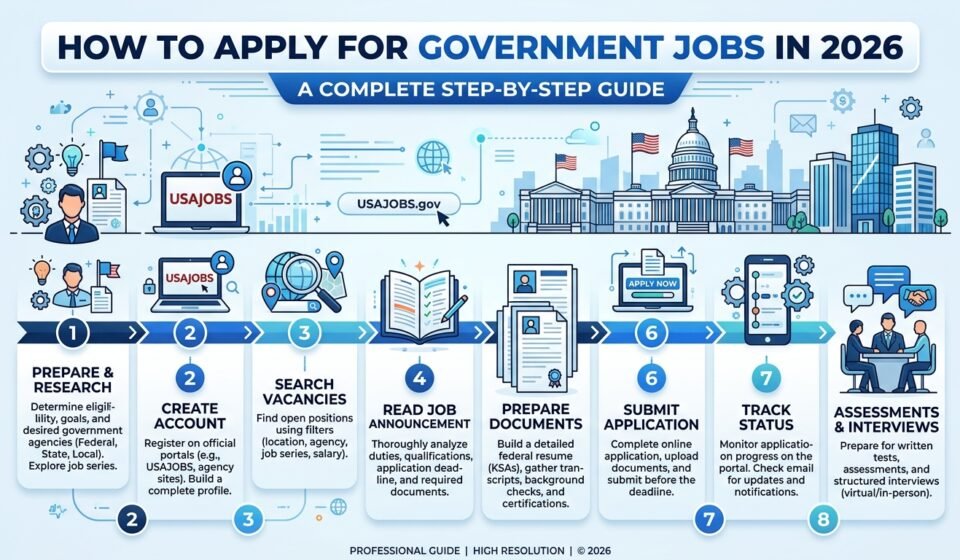
Step 3: Prepare the Required Documents
Having your documents ready in advance saves time and prevents last-minute panic. Commonly required documents include:
- Recently updated CV/Resume
- CNIC/National ID card copy
- Educational certificates and transcripts
- Domicile certificate
- Passport-size photographs (usually with a white or blue background)
- Experience letters (if applicable)
- Disability or quota certificates (if relevant)
Scan all documents in advance and save them in PDF format, since most application portals now require digital uploads rather than physical copies.
Step 4: Fill Out the Application Form Correctly
This step is where most rejections happen — not because candidates are unqualified, but because of careless mistakes. Follow these tips:
Read Instructions Twice
Application forms often have specific formatting requirements — photo size, file format, or deadline time zones. Missing these details can disqualify an otherwise strong application.
Double-Check Personal Information
Your name, CNIC number, and date of birth must exactly match your official documents.
Choose the Correct Post and Department Code
Many government forms list multiple posts under one advertisement. Selecting the wrong post code is a common and entirely avoidable mistake.
Pay the Application Fee (If Required)
Some departments require a nominal processing fee via bank challan or online payment. Keep the receipt — you may need to upload or submit it as proof.
Step 5: Prepare for the Test and Interview
After submitting your application, most government jobs require candidates to clear a written test and/or interview.
Written Test Preparation
- Focus on general knowledge, current affairs, and subject-specific material related to the post.
- Practice past papers, which are often available from previous candidates or coaching centers.
- Time management during the test is just as important as knowledge — practice with a timer.
Interview Preparation
- Research the department you’re applying to.
- Prepare clear, honest answers about your qualifications and career goals.
- Dress professionally and arrive at least 30 minutes early.
Step 6: Track Your Application Status
After submission, don’t just wait passively. Most government portals allow you to:
- Check your application status online using your CNIC or roll number
- Download your admit card/roll number slip before the test date
- Receive SMS or email updates regarding test dates and results
Set a reminder to check the relevant department’s website weekly, as schedules can shift with little advance notice.
Common Mistakes to Avoid
- Applying after the deadline (submit at least 2–3 days early to avoid server crashes on the last day)
- Uploading blurry or incorrectly sized photographs
- Ignoring the domicile or age relaxation clause when applicable
- Sharing personal documents with unverified “job agents”
- Not keeping copies of the submitted form and fee receipt
Frequently Asked Questions (FAQs)
Q1: How can I apply for government jobs online? A: Visit the official recruiting body’s website or the relevant department’s careers page, create an account, fill in your details, upload the required documents, and submit the form before the deadline.
Q2: Is there an age limit for government jobs? A: Yes, most posts specify an age range, typically between 18 and 35 years, though relaxations may apply for certain candidate categories.
Q3: Do government jobs require an application fee? A: Some do, usually a small non-refundable fee paid via bank challan or online payment gateway, depending on the department.
Q4: How long does the government hiring process take? A: It varies by department, but the process — from application to final selection — commonly takes anywhere from 2 to 6 months.
Q5: Can I apply for multiple government posts at once? A: Yes, as long as you meet the eligibility criteria for each post and submit separate applications where required.