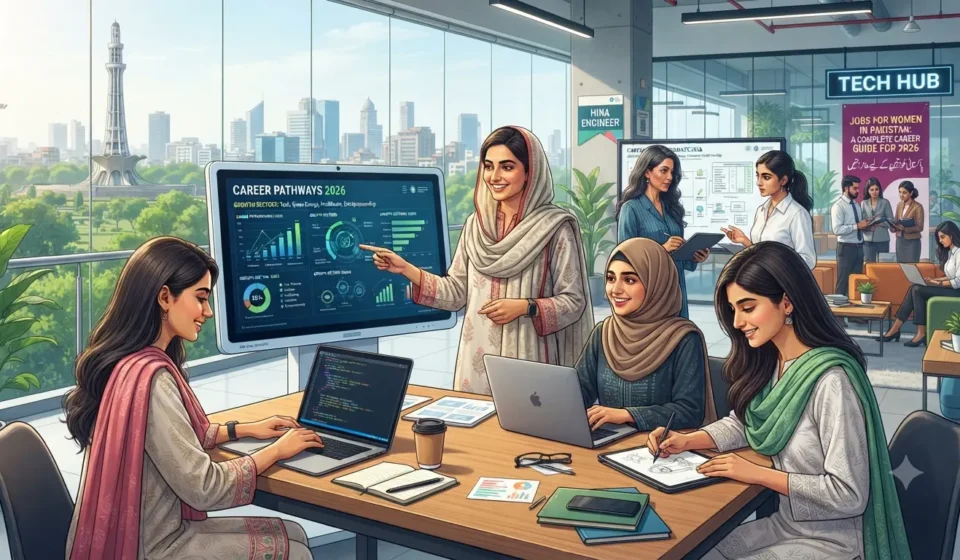

Finding the right job as a woman in Pakistan can feel like navigating a maze — between family expectations, safety concerns, and figuring out which fields actually offer growth. The good news? The landscape has shifted a lot in the last few years. More companies are hiring remotely, more women are stepping into leadership roles, and entire industries that barely existed a decade ago — like e-commerce and digital marketing — are now wide open.
This guide walks you through the best career paths currently available for women in Pakistan, where to look for openings, how to prepare a strong application, and how to handle some of the practical challenges that come up along the way. Whether you’re a fresh graduate, a stay-at-home mother returning to work, or someone thinking about a career switch, there’s something here for you.
Why the Job Market Is Changing for Women in Pakistan
A decade ago, women’s employment in Pakistan was heavily concentrated in teaching, healthcare, and banking. Those fields are still strong, but the picture today is much broader. Remote work has removed the daily commute as a barrier for many households. Freelance platforms have made it possible to earn in dollars while working from home in Lahore, Karachi, or a small town in Punjab. And government policies — including workplace harassment laws and quota systems in public sector jobs — have made offices somewhat safer and more accessible than before.
That said, challenges remain: limited mobility in some cities, family pressure around night shifts or travel, and a gender pay gap that hasn’t closed yet. Knowing these realities upfront helps you choose a field and employer that actually fits your life.
Top Career Fields for Women in Pakistan
1. Education and Teaching
Teaching remains one of the most respected and accessible career paths for women in Pakistan. Schools, colleges, and universities across the country regularly hire for subject teachers, coordinators, and administrative roles. It offers predictable hours, decent job security, and — particularly in private schools — a working environment many families are comfortable with.
If you’re just starting out, a B.Ed or M.Ed alongside a subject degree makes you far more competitive. Government teaching jobs, advertised through provincial Public Service Commissions, also offer strong long-term benefits including pensions.
2. Healthcare and Nursing
Pakistan has a chronic shortage of qualified female doctors, nurses, and lady health workers, especially outside major cities. This makes healthcare one of the most in-demand fields for women, with hospitals, NGOs, and government health programs actively recruiting. Roles range from general physicians and nurses to lab technicians and midwives.
Healthcare careers do require formal qualifications (MBBS, nursing diplomas, or relevant certifications), but the payoff is strong job security and the ability to work in both public and private sectors.
3. Banking and Finance
Major banks in Pakistan — including HBL, UBL, MCB, and Meezan Bank — have made visible efforts to hire more women, from customer service roles to management trainee programs. Banking offers structured career growth, competitive salaries, and, in many branches, women-friendly shift timings.
If you have a background in finance, accounting, or business administration, banking is worth exploring early in your career, since most banks recruit fresh graduates through formal trainee programs.
4. Remote and Freelance Work
This is where things have changed the most. Freelancing platforms like Upwork, Fiverr, and Freelancer let women work from home on projects ranging from content writing and graphic design to virtual assistance and social media management. For many women managing household responsibilities alongside a career, remote work removes the two biggest obstacles: commuting and rigid office hours.
Popular remote roles for women in Pakistan right now include:
- Content writing and copywriting
- Graphic design and video editing
- Virtual assistance and online customer support
- Social media management
- Online tutoring (especially in English, Math, and O/A Level subjects)
5. IT and Tech
Software houses in cities like Lahore, Islamabad, and Karachi are increasingly hiring women as developers, QA engineers, UI/UX designers, and project managers. Tech doesn’t just pay well — it also tends to offer more flexible, merit-based work cultures compared to some traditional industries.
Free and low-cost resources like Google’s Digital Skills programs, YouTube tutorials, and coding bootcamps have made it easier than ever to break into tech without a computer science degree, though a relevant degree still helps for corporate roles.
6. Government and Public Sector Jobs
Government jobs remain highly attractive because of job security, pension benefits, and defined working hours. Most provincial and federal government positions have a reserved quota for women, and roles are available across departments — from clerical positions to officer-level jobs through CSS and PPSC exams.
If long-term stability matters more to you than a fast career climb, this is a solid path to research.
7. Entrepreneurship and Home-Based Business
Not every woman wants to work for someone else — and Pakistan’s growing e-commerce scene has made home-based businesses genuinely viable. From boutique clothing brands sold on Instagram to home bakeries and beauty services, small business ownership lets women set their own hours and scale at their own pace, often starting with very little capital.
How to Find Legitimate Job Opportunities
Once you’ve picked a direction, the next challenge is finding real, safe opportunities. A few practical tips:
- Use trusted job portals like Rozee.pk, Indeed Pakistan, LinkedIn, and Mustakbil rather than random Facebook groups, where scams are more common.
- Verify the company before applying — check if they have a real office, a working website, and genuine employee reviews.
- Be cautious of “too good to be true” offers, especially ones asking for money upfront or promising unrealistic salaries for online work.
- Network actively. Many jobs in Pakistan are filled through referrals, so let friends, family, and former classmates know you’re job hunting.
- Attend job fairs and university placement drives, which often connect directly with employers actively looking to hire women.
Building a Strong Application
A well-prepared CV and a confident interview matter just as much as your qualifications. Keep your CV clear and one page if possible, highlighting relevant skills and any internships or freelance work, even if it feels small. For interviews, research the company beforehand and prepare examples that show what you’ve actually accomplished, not just what you’ve studied.
If you’re returning to work after a career break, don’t be shy about explaining the gap honestly — many employers today are more understanding of this than they used to be, especially as more companies build “returnship” programs specifically for women re-entering the workforce.
Frequently Asked Questions
Q1: What is the easiest job for a woman to start in Pakistan with no experience? Online tutoring, content writing, and virtual assistant roles are among the easiest to start with minimal experience, since many clients value clear communication and reliability over formal credentials.
Q2: Are remote jobs for women in Pakistan legitimate? Yes, many are — especially through established platforms like Upwork and Fiverr, or with companies that have a verifiable online presence. Always research an employer before sharing personal or financial information.
Q3: Which government jobs are best for women in Pakistan? Teaching positions, PPSC and FPSC officer roles, and healthcare positions in public hospitals are among the most sought-after, thanks to job security, pension benefits, and reserved quotas for women.
Q4: Do women need a specific degree to work in IT in Pakistan? Not always. While a computer science degree helps for corporate roles, many women successfully enter IT through bootcamps, online courses, and self-taught skills in areas like web development, design, and digital marketing.
Q5: How can I balance a full-time job with family responsibilities in Pakistan? Many women find that remote or hybrid roles, flexible-hour jobs, or teaching positions with school-hour schedules make this balance more manageable. It’s also worth discussing flexible arrangements directly with employers, as many are increasingly open to it.
Final Thoughts
The job market for women in Pakistan is far from perfect, but it’s opening up in real, tangible ways — through remote work, growing sectors like tech and e-commerce, and stronger legal protections in the workplace. The key is matching your skills and life circumstances to the right field, using trustworthy platforms to search, and putting together an application that genuinely reflects what you bring to the table.