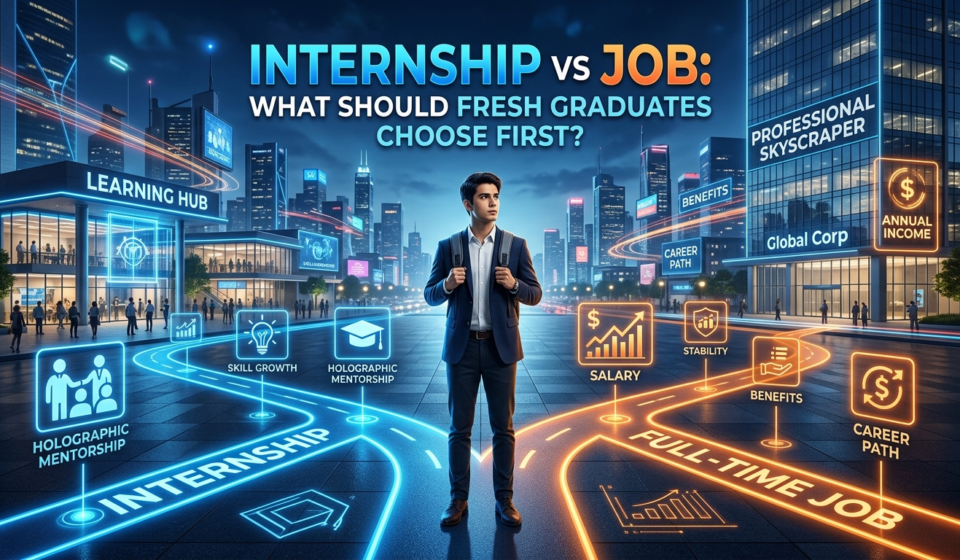

You’ve just graduated, your degree is finally in hand, and now comes the question that keeps most fresh graduates up at night: should you take an internship to build experience, or jump straight into a full-time job and start earning? It’s a decision that feels bigger than it probably needs to be — and honestly, there’s no single right answer that applies to everyone.
Some graduates land a paid internship that turns into a permanent role within months. Others start scrolling through job openings near me the day after convocation, hoping to skip the “entry-level experience required” trap altogether. Both paths can work — but they work differently depending on your field, your financial situation, and your long-term goals.
In this article, we’ll break down the real differences between internships and jobs, when each option makes more sense, and how to decide based on your specific circumstances rather than general advice that doesn’t account for your situation.
Understanding the Core Difference Between an Internship and a Job
Before comparing the two, it helps to be clear on what each actually offers.
An internship is typically a short-term, structured learning opportunity. It’s designed to give you hands-on exposure to a specific industry or role, often under the guidance of a mentor or supervisor. Some internships are paid, many aren’t, and most last anywhere from a few weeks to six months.
A full-time job, on the other hand, comes with ongoing responsibilities, a fixed or negotiated salary, and an expectation that you’ll contribute meaningfully from early on — not just observe and learn. There’s usually more accountability, but also more stability and financial return.
Neither is inherently “better.” They simply serve different purposes at different stages of a career.
When an Internship Makes More Sense
You’re Still Exploring Your Career Direction
If you finished your degree but aren’t entirely sure which specialization or industry you want to commit to, an internship gives you room to test the waters without fully committing. You can try out a role, realize it’s not for you, and pivot — something that’s much harder to do once you’re locked into a full-time position with real responsibilities.
Your Field Requires Practical Exposure Before Hiring
Certain industries — journalism, design, engineering, healthcare, and finance among them — place heavy weight on hands-on experience. Employers in these fields often prefer candidates who’ve already worked in a real environment, even briefly, over those with only theoretical knowledge. An internship here isn’t just useful; it’s often a prerequisite for getting seriously considered later.
You Want to Build a Professional Network Early
Internships put you in daily contact with professionals who can vouch for your work ethic later. A strong recommendation from a supervisor, or simply staying on their radar for future openings, can matter more than you’d expect. Many fresh graduates land their first real job through a connection made during an internship — not through a cold application.
Example Scenario
Consider a graduate with a marketing degree who takes on a three-month internship at a digital agency. She doesn’t earn much during that period, but she walks away with actual campaign experience, a portfolio of real client work, and a manager willing to recommend her. Within two months of finishing the internship, she’s offered a full-time position — partly because the agency already trusts her work, and partly because her resume now shows practical, not just academic, experience.
When Taking a Full-Time Job Makes More Sense
You Need Financial Stability Right Away
This is often the deciding factor, and it’s a completely valid one. If you have financial responsibilities — supporting family, paying off education costs, or simply needing a steady income — an unpaid or low-paying internship may not be realistic, no matter how valuable the experience sounds on paper.
You Already Have Relevant Experience
If you completed internships or worked part-time during your studies, you may already have enough practical exposure to skip the internship stage entirely. In that case, applying directly for entry-level job openings near me makes more sense than repeating a learning phase you’ve already been through.
Your Field Hires Fresh Graduates Directly
Some industries — sales, customer support, certain tech roles, and administrative positions — regularly hire fresh graduates into full-time roles with on-the-job training built in. If that’s the norm in your field, there’s little reason to delay income by seeking an internship first.
You Want to Start Building Retirement and Career Benefits Sooner
Full-time jobs typically come with benefits that internships rarely offer: provident funds, health insurance, paid leave, and formal experience letters that count toward your total years of service. If long-term career progression is your priority, starting that clock earlier can work in your favor.
Comparing Internship and Job: Key Factors to Weigh
Compensation
Internships often pay little to nothing, while full-time jobs come with a defined salary. If income is a pressing need, this alone might settle the decision.
Learning Curve
Internships are built around learning, with lower expectations and more room to make mistakes. Jobs expect you to perform from day one, with less patience for a steep learning curve.
Job Security
Full-time roles generally offer more stability, while internships are, by definition, temporary — though some do convert into permanent positions.
Resume Impact
Both add value, but in different ways. An internship shows initiative and practical exposure; a job shows you can hold real responsibility and deliver results independently.
Flexibility to Explore
Internships allow you to test different roles or industries with lower risk. A full-time job usually expects a longer-term commitment, making it harder to pivot without it looking like job-hopping on your resume.
Can You Do Both? A Hybrid Approach
For some graduates, the choice isn’t strictly either-or. A few practical hybrid strategies include:
- Taking a paid internship first, then transitioning into a full-time role at the same company once you’ve proven yourself — this is one of the most common and low-risk paths.
- Applying for jobs while doing a short-term internship simultaneously, if your schedule allows, so you’re not putting your job search entirely on hold.
- Choosing a “fresh graduate trainee” program, which many companies now offer — these blend the structured learning of an internship with the pay and stability of a full-time role.
If you’re unsure which route to take, this hybrid approach often reduces the risk of either choice while still moving your career forward.
How to Decide: A Quick Self-Check
Ask yourself these questions before making your decision:
- Do I need a steady income immediately, or can I manage a few months without one?
- Does my field typically require practical experience before offering full-time roles?
- Do I already have internship or part-time experience I can build on?
- Am I still unsure about which career direction to pursue?
- Is there a specific company or industry I want to break into, where an internship could open doors faster than a cold application?
If most of your answers point toward needing income or already having relevant experience, a full-time job is likely the smarter move. If you’re still exploring or your field demands hands-on exposure first, an internship may serve you better in the long run.
Frequently Asked Questions
Q1: Is it better to do an internship or get a job right after graduation? It depends on your financial situation and industry. If you need immediate income or already have practical experience, a full-time job makes sense. If you’re still exploring your career direction or your field values hands-on exposure, an internship can be the smarter first step.
Q2: Do employers value internship experience as much as job experience? Many employers do value internship experience, especially for fresh graduates with no prior work history. It shows initiative and practical exposure, though it typically doesn’t carry the same weight as full-time job experience when it comes to seniority or responsibility.
Q3: Can an internship turn into a full-time job? Yes, this happens frequently. Employers often prefer converting a well-performing intern into a permanent employee rather than hiring and training someone new from scratch.
Q4: Should I keep applying for full-time job openings near me while doing an internship? Yes, if your schedule permits. There’s no harm in continuing your job search during an internship, especially if the internship is unpaid or you’re unsure it will lead to a permanent offer.
Q5: How long should a fresh graduate stay in an internship before looking for a full-time job? Most internships run three to six months. If there’s no indication of a permanent offer by the end of that period, it’s generally a good time to start actively applying for full-time roles elsewhere.