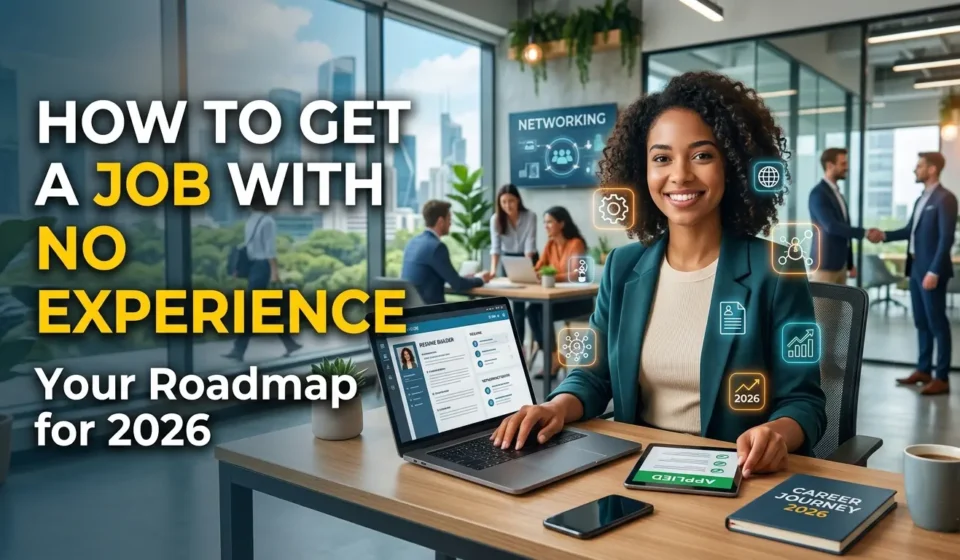

Introduction: You Don’t Need Experience to Get Started
Here’s a truth that most job postings won’t tell you: almost every professional you admire once had zero experience. The challenge is that the job market in 2026 feels more competitive than ever — AI is screening resumes, companies are posting “entry-level” roles that somehow require two years of experience, and it’s easy to feel like you’re stuck in a loop.
But here’s the good news: the rules have changed in your favor in some key ways. Remote work has opened up more opportunities. Freelance and gig-based hiring has normalized short-term and project-based work. And employers increasingly value demonstrated skills over credentials alone.
In this guide, you’ll learn exactly how to get a job with no experience — from building a standout resume to networking with confidence, using AI tools to your advantage, and landing that first offer even when your work history is blank.
What “No Experience” Actually Means to Employers
Before diving into tactics, it helps to understand what hiring managers are really looking for when they post entry-level jobs.
When a recruiter says “no experience required,” they typically still want to see:
- Evidence that you can learn quickly
- Some form of initiative or self-direction
- Soft skills like communication, reliability, and problem-solving
- Any project, volunteer work, or coursework that relates to the role
The goal, then, isn’t to pretend you have experience you don’t — it’s to reframe what you do have in a way that speaks to those needs. A school project where you managed a team budget is relevant finance experience. A blog you ran for two years shows content creation skills. Even babysitting a neighbor’s kids demonstrates scheduling, communication, and responsibility.
Your job is to connect the dots for the employer.
How to Build a Resume With No Work History
Your resume is still your most important tool — even when it feels like there’s nothing to put on it. The key is structure and framing.
Lead With a Skills-Based Summary
Instead of leading with a chronological work history (which would be sparse), open with a 2–3 sentence professional summary that highlights your strongest transferable skills and what you’re looking to contribute. This immediately reframes the narrative.
Example: “Motivated recent graduate with hands-on experience in social media content and data analysis through academic projects. Skilled in Google Analytics, Canva, and Excel. Looking to bring strong attention to detail and fast-learning ability to a marketing coordinator role.”
Include Relevant Projects and Coursework
A dedicated “Projects” section is your best friend when you’re just starting out. List any academic projects, personal initiatives, freelance work, or class assignments that demonstrate relevant skills.
- Include the tools you used
- Note any measurable outcomes (“increased Instagram followers by 40% for a class project”)
- Treat group projects as legitimate team experience
Volunteer Work Counts
Any unpaid work you’ve done for nonprofits, community organizations, religious institutions, or school clubs is fair game. List it under a “Volunteer Experience” section just as you would a paid role — with a title, organization, dates, and bullet points describing what you actually did.
Certifications Fill Gaps Fast
In 2026, free and low-cost certifications have never been more accessible. Google, HubSpot, Coursera, LinkedIn Learning, and others offer certificates in marketing, data analysis, project management, IT support, and more — many of which can be completed in days or weeks. Adding even one or two relevant certifications to your resume signals initiative and closes the credibility gap.
Where to Find Jobs With No Experience in 2026
Not all job boards are created equal for first-time job seekers. Here’s where to focus your energy.
Entry-Level and Internship-Specific Platforms
Sites like Handshake, WayUp, and Chegg Internships are built specifically for students and recent graduates. These platforms screen out the “entry-level but requires 3 years” listings that plague general job boards. If you’re in school or recently graduated, these should be your first stop.
LinkedIn — Used the Right Way
LinkedIn remains the most powerful professional network in the world, but most people use it passively. To stand out without experience, you need to be active:
- Post about what you’re learning — even a short post about completing a certification gets visibility
- Comment thoughtfully on posts in your target industry
- Reach out to people in roles you want and ask genuine questions, not just for jobs
- Use the “Open to Work” feature (you can make it visible only to recruiters if preferred)
Local and Niche Job Boards
Don’t overlook local job boards, industry association websites, and city-specific Facebook groups. Smaller employers often post exclusively in these places and are more willing to hire someone with potential over credentials.
Staffing Agencies and Temp Work
Temporary staffing agencies are an underutilized entry point. They can place you in short-term roles that often convert to permanent positions. You build experience, references, and industry contacts — all while getting paid.
How to Network When You Have No Connections
Networking feels intimidating when you’re starting from scratch, but it doesn’t have to mean awkward events with name tags. Modern networking is quieter and more strategic.
Start With What You Have
Your immediate network is larger than you think: former classmates, professors, coaches, family friends, neighbors, and anyone who knows you by name and would vouch for your character. Let these people know you’re job searching and what kind of work you’re looking for. Referrals from existing employees are one of the highest-converting hiring channels for employers — meaning a word from someone on the inside dramatically improves your odds.
Informational Interviews
Reach out to people in roles or industries that interest you and ask for a 15-minute informational interview — a casual conversation where you ask about their career path, the day-to-day of their role, and what skills matter most. Most people say yes, and you leave with insider knowledge and a professional contact. Many job seekers have landed offers this way simply because they were top of mind when a position opened.
LinkedIn Outreach That Works
A cold message that leads with flattery rarely works. Instead, be specific and genuine:
“Hi [Name], I noticed you work in UX design at [Company] — I’m just starting out and recently completed a UX certification. I’d love to hear how you broke into the field. Would you be open to a quick 15-minute chat sometime this month?”
Short, specific, and easy to say yes to.
Leveraging AI Tools to Get Hired Faster
In 2026, job seekers who use AI tools strategically have a real edge. Here’s how to use them practically.
Resume and Cover Letter Tailoring
Tools like Claude, ChatGPT, and others can help you tailor your resume and cover letter to each job description in minutes. Paste in the job description and ask for help identifying which of your skills and experiences to emphasize. This kind of customization used to take hours — now it takes minutes, meaning you can apply to more positions with higher-quality applications.
ATS Optimization
Most medium and large employers use Applicant Tracking Systems (ATS) to pre-screen resumes before a human ever sees them. AI tools can analyze your resume against a job description and flag missing keywords that might cause an ATS to filter you out. Always run your resume through this kind of check before submitting.
Interview Preparation
AI tools can simulate mock interview questions based on a specific role, give feedback on your answers, and help you prepare concise, confident responses. Practice answering “Tell me about yourself” and behavioral questions (“Tell me about a time when…”) using real examples from your life — school, volunteering, or personal projects all qualify.
Industries and Jobs That Commonly Hire With No Experience
Some industries are structurally more open to first-time workers than others. In 2026, these fields are actively hiring entry-level candidates:
Customer Service and Retail — Communication skills and a willingness to learn are the primary requirements. These roles build foundational professional skills and often offer internal promotion tracks.
Administrative and Office Support — Companies regularly hire for data entry, scheduling, and reception roles with minimal experience requirements. These are excellent stepping stones into larger organizations.
Tech and IT Support — Entry-level help desk and IT support roles often require certifications (like CompTIA A+) rather than degrees or experience. Google’s IT Support Certificate on Coursera was specifically designed as an entry point.
Digital Marketing and Content Creation — If you have any social media savvy, writing skills, or visual design experience (even from personal use), entry-level marketing roles at small businesses and startups are accessible. Many smaller companies actively prefer candidates with fresh, current platform knowledge over veteran marketers.
Healthcare Support Roles — Roles like medical receptionist, home health aide, or pharmacy technician typically offer on-the-job training and certification pathways without requiring prior experience.
Logistics and Warehousing — With e-commerce continuing to expand, warehouse, fulfillment, and delivery roles remain high in demand and hire daily with no prior experience required.
FAQ: Getting a Job With No Experience
Q: Is it really possible to get hired with zero work experience?
Yes — and it happens every day. The key is presenting your non-work experience (school projects, volunteer work, personal initiatives, certifications) effectively. Employers at the entry level are primarily evaluating your potential, attitude, and ability to learn.
Q: Should I lie about my experience to get hired?
Never. Misrepresenting experience on a resume is grounds for immediate termination and can follow you professionally. Instead, focus on reframing real experiences honestly — there is always something genuine to highlight.
Q: How many jobs should I apply to?
Quality beats quantity. A tailored application for 5 targeted roles will outperform 50 generic applications every time. That said, aim to send out 10–15 carefully tailored applications per week if you’re actively job searching.
Q: What if every entry-level job requires 1–2 years of experience?
This is frustrating but common. A few strategies: apply anyway (many employers list ideal requirements, not mandatory ones), reach out directly to hiring managers after applying, and look at smaller companies and startups where experience requirements are often more flexible than at large corporations.
Q: Do I need a cover letter if I have no experience?
A well-written cover letter is actually more important when you have little work history, not less. It’s your chance to explain your enthusiasm, connect your background to the role, and show personality that a resume can’t convey.
Conclusion: Your First Job Is Closer Than You Think
Getting a job with no experience is less about what you haven’t done yet and more about how you present what you have done. Reframe your academic work. Highlight your volunteer experience. Get certified in relevant skills. Network with intention. Tailor every application. And keep going.
The job market in 2026 rewards people who are resourceful, proactive, and willing to put themselves out there — and none of those qualities require a prior job title.
Ready to take the next step? Start by updating your LinkedIn profile today, identifying two certifications relevant to your target industry, and reaching out to one person for an informational interview this week. Your first job is one good application away.
Internal linking opportunities: Link “entry-level jobs” to a related article on entry-level resume tips; link “certifications” to a guide on free online certifications; link “ATS optimization” to an article on beating applicant tracking systems.
Read More