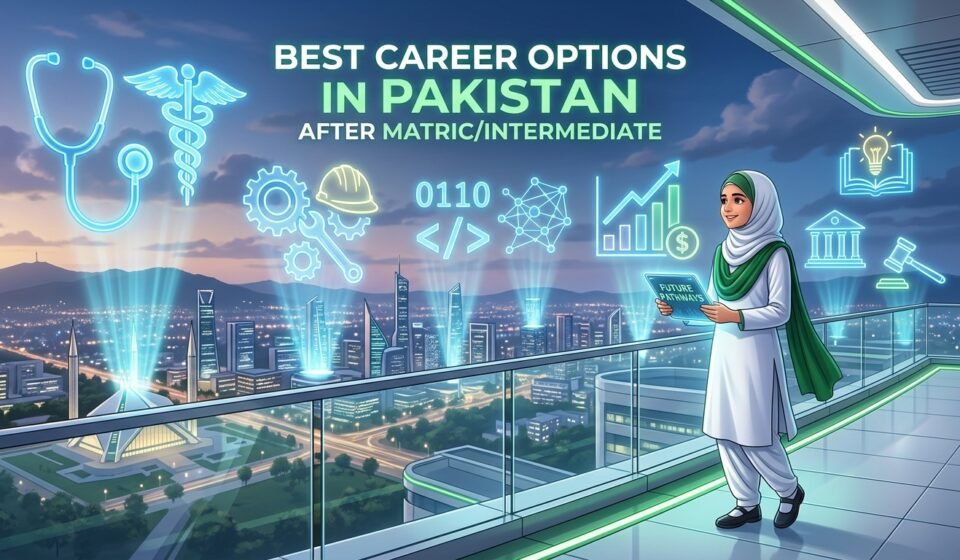

Finishing Matric or Intermediate feels like a big moment. There’s relief that exams are over, but it’s usually followed by a much bigger question: what now? Some students head straight into college, others start looking for part-time work, and a growing number are exploring online income while they figure out their next step.
If you’re in that in-between stage, you’re not alone. Every year, lakhs of students across Punjab, Sindh, KPK, and Balochistan finish their board exams and feel unsure about which direction actually makes sense for them — financially and career-wise. This article walks through the most realistic and rewarding career paths available in Pakistan right now, including traditional degree routes, technical training, and flexible options like data entry jobs in Pakistan that let students start earning without waiting years for a degree.
By the end, you’ll have a clearer picture of which path fits your interests, budget, and timeline.
Why This Decision Matters More Than It Used To
A generation ago, the path after Intermediate was fairly fixed: pick a degree, finish it, then look for a job. That’s changed. Pakistan’s job market has shifted toward skills and portfolios, not just certificates. Employers in fields like IT, digital marketing, and remote administrative work increasingly care more about what you can actually do than which university you attended.
This doesn’t mean degrees are useless — for fields like medicine, engineering, or law, formal education is still essential. But for a large chunk of students, especially those wanting to earn sooner rather than later, skill-based and online career paths have opened doors that simply didn’t exist ten years ago.
Traditional Degree Paths Worth Considering
Medical and Engineering
For science students who scored well and have a genuine interest in the field, MBBS, BDS, or engineering degrees remain strong long-term choices. These paths require patience — often five years of study before real earning begins — but they lead to stable, respected careers with consistent demand across Pakistan.
Business and Commerce Degrees
Commerce students often move toward BBA, BCom, or ACCA. These degrees open doors in banking, accounting, and corporate management. ACCA in particular has gained popularity because it’s recognized internationally and can be started right after Intermediate.
Arts, Humanities, and Social Sciences
Fields like psychology, mass communication, and international relations have grown in relevance, especially with the rise of content, media, and NGO-sector jobs in Pakistan. These degrees pair well with practical skills like writing or digital communication.
Technical and Vocational Training: Faster Routes to Employment
Not every good career requires a four-year degree. Technical training institutes across Pakistan, including government-run TEVTA and NAVTTC programs, offer short courses in fields like:
- Graphic design
- Web development
- Electrical and HVAC technician work
- Beautician and fashion design courses
- Culinary and hospitality training
These programs typically run six months to two years and are far cheaper than a university degree. For students who learn better hands-on than through theory-heavy coursework, this route often leads to employment faster.
Freelancing and Remote Work: The Fastest-Growing Option
This is where things have genuinely changed for students in Pakistan. With a laptop, a stable internet connection, and some patience to learn, students as young as 16 or 17 are earning through freelance platforms.
Data Entry Jobs in Pakistan: A Practical Starting Point
Among the entry-level options, data entry jobs in Pakistan are one of the most accessible ways for Matric or Intermediate students to start earning online. Data entry work typically involves tasks like:
- Transferring information from documents or images into spreadsheets
- Updating databases or CRM systems for businesses
- Typing and formatting content from PDFs or scanned files
- Basic online research and data compilation
The appeal is simple: it doesn’t require a degree, advanced technical skills, or big upfront investment. What it does require is accuracy, decent typing speed, and basic computer literacy — things most students already have or can pick up within a few weeks.
How to get started with data entry jobs in Pakistan:
- Build a simple profile on freelancing platforms like Fiverr, Upwork, or local platforms such as Rozee.pk.
- Practice typing speed and accuracy using free online tools — aim for at least 35-40 words per minute with minimal errors.
- Get comfortable with Excel or Google Sheets basics, since most data entry tasks involve spreadsheets.
- Start with smaller, lower-paying gigs to build reviews and credibility, then gradually move to better-paying clients.
- Stay alert for scams — legitimate data entry jobs never ask you to pay money upfront for “training” or “registration.”
While data entry alone won’t make anyone rich, it’s a realistic entry point that teaches discipline, remote-work habits, and client communication — skills that transfer well into higher-paying freelance work later, like virtual assistance or bookkeeping.
Other Beginner-Friendly Online Roles
Beyond data entry, students often move into:
- Content writing — for blogs, product descriptions, or social media captions
- Virtual assistance — managing emails, scheduling, or admin tasks for overseas clients
- Social media management — running Instagram or Facebook pages for small businesses
- Basic graphic design — using tools like Canva for simple client projects
Many students combine a few of these skills, which increases both income potential and job security.
In-Demand Technical Skills Worth Learning
If you’re willing to invest a few months in learning before earning, these skills consistently show strong demand in Pakistan’s job market:
Web Development and Programming
Even basic HTML, CSS, and JavaScript knowledge can open freelance opportunities. Many students move on to Python or web frameworks once they’ve built a foundation.
Digital Marketing
Businesses across Pakistan — from local shops to exporters — need help with Facebook ads, SEO, and content strategy. Short courses (often free on YouTube or paid on platforms like Coursera) can get a beginner job-ready within a few months.
Graphic Design
Logo design, social media creatives, and branding work are consistently in demand. Tools like Canva, Adobe Photoshop, and Illustrator are the starting points.
IT Support and Networking
Certifications like CompTIA A+ or basic networking courses can lead to entry-level IT support roles in local companies, which often pay better than typical fresh-graduate positions.
Government and Semi-Government Jobs
For students who prefer stability over flexibility, government jobs remain attractive. Positions in departments like WAPDA, Pakistan Railways, or provincial public service commissions often accept candidates with Matric or Intermediate qualifications for lower-tier posts, with promotions tied to experience and further exams.
The process typically involves:
- Applying through official portals (like PPSC, FPSC, or provincial commissions)
- Sitting for a written test
- Clearing an interview and, in some cases, a physical test (for police or army-related roles)
These jobs offer long-term security and benefits like pensions, which private-sector or freelance work generally doesn’t provide.
How to Choose the Right Path for You
There’s no single “best” answer here — the right choice depends on a few honest questions:
- Can you afford to wait years before earning? If not, technical training or freelancing (including data entry jobs in Pakistan) may suit you better than a long degree program.
- Do you enjoy hands-on work or theoretical learning? Vocational training suits the former; university degrees suit the latter.
- Are you comfortable with self-discipline and no fixed schedule? Freelancing rewards self-starters but can be tough for those who need structure.
- Is job security your top priority? Government positions and established degree paths (medicine, engineering) offer more predictability.
It’s also worth remembering that these paths aren’t mutually exclusive. Plenty of students freelance part-time — including doing data entry jobs in Pakistan — while completing a degree, giving themselves both income and a long-term qualification.
Frequently Asked Questions
Can I get a data entry job in Pakistan right after Matric? Yes. Data entry jobs typically don’t require a specific degree — basic typing skills, attention to detail, and computer literacy are usually enough to get started, especially on freelancing platforms.
How much can a beginner earn from data entry jobs in Pakistan? Earnings vary widely, but beginners on freelance platforms often start with smaller projects and gradually increase rates as they build reviews and experience. It’s realistic to treat it as a starting income stream rather than a full replacement for other work initially.
Is it better to get a degree first or start working immediately after Intermediate? It depends on your field. Fields like medicine, engineering, and law require formal degrees. For skill-based work like freelancing, digital marketing, or technical trades, many students start building experience right away and pursue education alongside or later.
Are online data entry jobs in Pakistan legitimate, or mostly scams? Legitimate data entry work exists, particularly through established freelancing platforms and outsourcing companies. Be cautious of any offer asking for upfront payment or promising unrealistically high earnings for minimal work — these are common red flags.
What is the fastest way to start earning after Intermediate? Freelance skills like data entry, content writing, or virtual assistance generally have the shortest learning curve and can start generating income within weeks, compared to technical trades or degree programs that take longer.
Final Thoughts
There isn’t one correct path after Matric or Intermediate — there’s the path that fits your goals, finances, and interests. Whether that means pursuing a medical degree, learning a technical trade, or getting started with data entry jobs in Pakistan while you figure out the bigger picture, the important thing is to start moving rather than staying stuck in indecision.