
Applying for jobs today feels different than it did even five years ago. A single online job application now competes against hundreds of others, often reviewed by software before a human ever opens it. If you’ve been applying non-stop and hearing nothing back, it’s easy to assume something is wrong with you. In most cases, it isn’t. It’s usually a specific, fixable problem in how the application was prepared or submitted.
This guide walks through the most common reasons applications get rejected, backed by real hiring practices, and gives you practical steps to turn things around. Whether you’re a fresh graduate or a mid-career professional, understanding these patterns can save you weeks of frustration.
1. Applicant Tracking Systems Are Filtering You Out Before a Human Sees You
Before a recruiter even glances at your resume, it likely passes through an Applicant Tracking System (ATS). This software scans for keywords, job titles, and formatting that match the job description. If your resume isn’t structured in a way the system can read, it may never reach a human reviewer.
Signs Your Resume Might Be ATS-Blocked
- You’re using columns, text boxes, or heavy graphics
- Your job titles don’t match industry-standard terms
- You submitted a scanned image instead of an editable document
What You Can Do
Stick to a single-column layout with standard section headers. Read the job posting carefully and use the same terminology the employer uses. Submit your resume as a Word file or a text-searchable PDF rather than a scanned image.
2. Your Application Feels Copy-Pasted
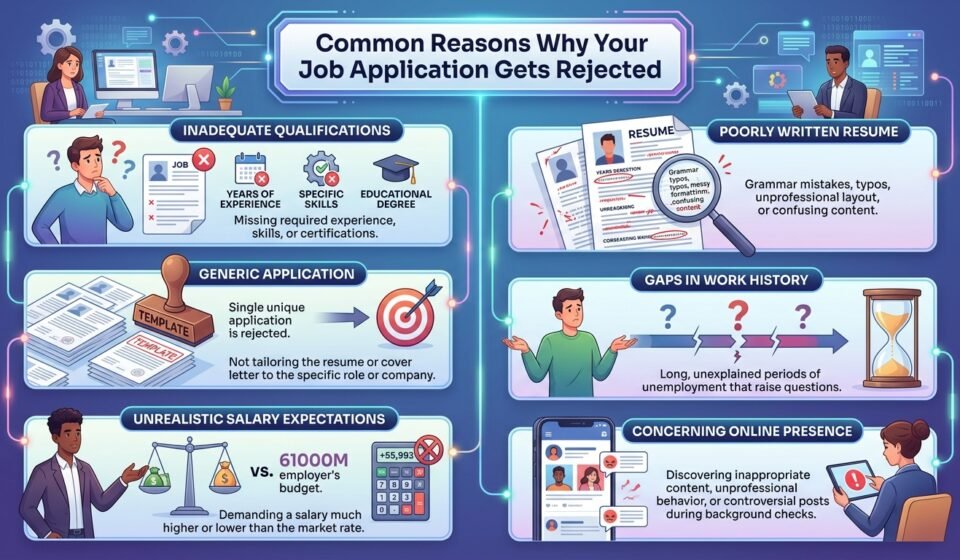
Recruiters read hundreds of applications a week, and generic ones stand out immediately, for the wrong reasons. A cover letter that never mentions the company name, or a resume summary that could apply to any job in any industry, signals low effort.
How Employers Spot This
- No specific reference to the role or company
- A summary that lists generic soft skills without context
- Copy-paste errors, like the wrong company name left over from a previous application
What You Can Do
Spend a few extra minutes customizing your resume summary and cover letter for each online job application. Reference something specific about the company or role, and connect your past experience directly to what they’re asking for.
3. Small Errors Are Creating a Big Impression
A single typo might seem minor, but to a hiring manager, it can suggest carelessness. This is especially true for roles that require attention to detail, like writing, finance, or administrative positions.
Where Mistakes Often Hide
- Inconsistent formatting between sections
- Wrong dates or job titles compared to your LinkedIn profile
- Broken links to a portfolio, GitHub, or personal website
What You Can Do
Read your application out loud before submitting, it helps catch errors your eyes tend to skip. Have someone else review it if possible, and confirm every link works before you hit send.
4. You Don’t Meet the Core Requirements
Not every rejection is about presentation. Sometimes the issue is a genuine skills or experience gap. If a posting requires a certification, a specific software skill, or a minimum number of years of experience, automated systems and recruiters alike may filter out applications that don’t meet those basics.
How to Check This Yourself
Go through the job description and separate “required” qualifications from “preferred” ones. If you’re missing several required items, it may explain the lack of response.
What You Can Do
If you’re close but not exact, use your cover letter to highlight transferable experience. If this becomes a repeated pattern across applications, consider a short course or certification to close the gap before applying further.
5. Your Digital Footprint Doesn’t Match Your Resume
It’s increasingly common for hiring managers to look up candidates on LinkedIn or Google before scheduling an interview. If your online profile is outdated, incomplete, or inconsistent with your resume, it can quietly work against you.
What Recruiters Often Check
- Whether your LinkedIn job history matches your resume
- Your profile photo and headline professionalism
- Any public posts that might raise concerns
What You Can Do
Keep your LinkedIn updated in parallel with your resume. Make sure job titles and dates match exactly, and review your public social media presence for anything that doesn’t reflect the professional image you want to present.
6. Timing Worked Against You
Sometimes rejection isn’t about your qualifications at all, it’s simply timing. Many roles receive most of their applications within the first two days of posting, and some positions are filled internally before the listing is even removed.
What You Can Do
Set up alerts for job boards in your field so you can apply early. Follow companies you’re interested in directly, since they often post openings there before job boards pick them up.
7. Your Resume Talks About Duties, Not Results
Listing responsibilities without showing impact makes it hard for an employer to see your actual value. Strong applications show outcomes, not just tasks.
A Quick Example
Before: “Handled customer inquiries and complaints.”
After: “Resolved an average of 40 customer inquiries daily, maintaining a 95% satisfaction rating.”
What You Can Do
Revisit your resume bullet points and ask: what changed because of this work? Add numbers, percentages, or specific outcomes wherever you can.
Frequently Asked Questions
Q: Why don’t companies tell me why my job application was rejected? Most companies avoid giving detailed feedback due to legal and time constraints. High application volumes make individual responses impractical for most employers.
Q: Does applying through a company’s website work better than job boards? It can, since some employers prioritize candidates who apply directly. However, this varies by company and isn’t a guaranteed advantage.
Q: How long should I wait before following up on an application? One to two weeks is generally appropriate. A short, polite follow-up email can show genuine interest without appearing pushy.
Q: Should I still apply if I don’t meet every requirement listed? Yes, especially if you meet the required qualifications and are only missing a few preferred ones. Use your cover letter to address any gaps directly.
Q: Can a poorly formatted resume really get rejected by software alone? Yes. Many ATS platforms struggle with complex formatting, meaning a technically strong candidate can be filtered out purely due to file structure.