
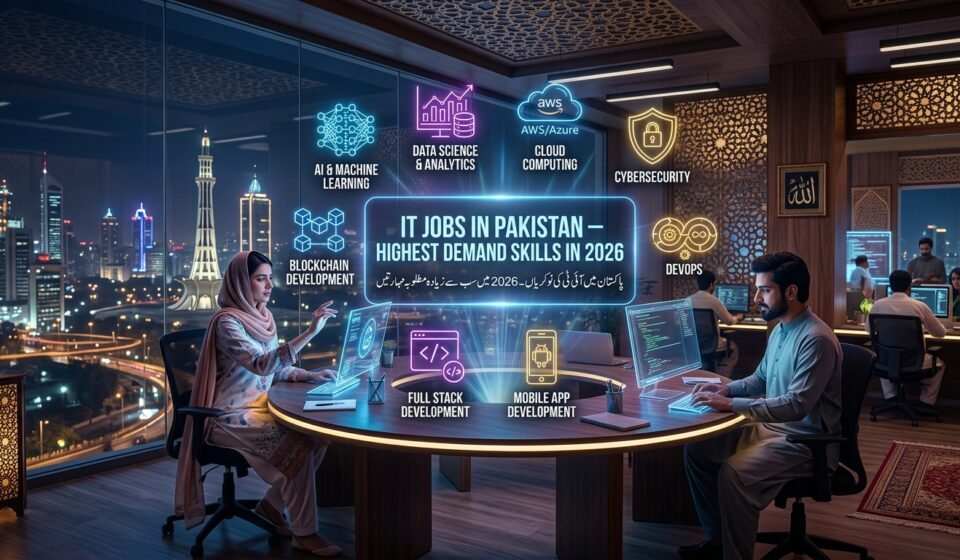

Pakistan’s tech industry isn’t just growing — it’s booming. Every week brings news of another startup raising funding, another multinational opening a Lahore or Karachi office, another freelancer landing a client from Europe or the US. If you’re job hunting or thinking about switching careers, IT jobs Pakistan searches have spiked for a good reason: this is one of the few sectors where demand for talent still outpaces supply.
But here’s the catch — not every “IT job” pays well, and not every skill you learn today will still be relevant two years from now. In this guide, we’ll walk through exactly which tech skills are worth your time in 2026, what salaries actually look like across different cities, and how to position yourself for the roles companies are struggling to fill.
Why IT Jobs in Pakistan Are on the Rise
A few years ago, “IT job” mostly meant working at a local software house for a modest salary. That’s changed. Pakistan’s freelance and remote-work economy has matured, more international companies are outsourcing development work here, and the government has pushed several digital initiatives to support the sector.
A few reasons this shift matters for job seekers:
- Remote work normalized international pay scales. Someone in Islamabad can now work for a company in Berlin or Toronto without relocating.
- Freelancing platforms matured. Pakistan consistently ranks among the top countries globally for freelance IT earnings, particularly in software development and digital marketing.
- Local startups are hiring aggressively. Fintech, e-commerce, and ed-tech companies are competing for the same limited pool of skilled developers, which pushes salaries up.
- Universities and bootcamps expanded tech education, though there’s still a gap between what’s taught and what employers actually need — which is exactly why skill-specific training matters more than a degree alone.
Highest Demand IT Skills in Pakistan for 2026
If you’re deciding what to learn or which jobs to target, focus your energy here first.
1. Software Development (Full-Stack & Backend)
Full-stack developers remain the most requested profile on almost every job board. Companies want people comfortable across the stack — not just front-end polish, but backend logic, databases, and APIs too.
What’s in demand:
- JavaScript/TypeScript with React or Next.js
- Node.js and Python (especially Django/FastAPI) for backend
- PHP/Laravel — still widely used by local software houses
- Java and Spring Boot for enterprise-level projects
2. Cloud Computing & DevOps
As more companies move infrastructure off physical servers, cloud skills have gone from “nice to have” to “required.” AWS, Azure, and Google Cloud certifications carry real weight with employers now, sometimes more than a computer science degree.
Worth learning:
- AWS Solutions Architect or DevOps Engineer certification
- Docker and Kubernetes
- CI/CD pipeline tools (Jenkins, GitHub Actions)
- Infrastructure as Code (Terraform)
3. Artificial Intelligence & Machine Learning
AI roles have moved from niche to mainstream demand. Companies aren’t just looking for research-level ML engineers anymore — they want people who can integrate AI tools (like large language models) into everyday products.
Focus areas:
- Python for data science and ML (pandas, scikit-learn, PyTorch)
- Prompt engineering and LLM integration (OpenAI/Anthropic APIs)
- Data analysis and visualization
4. Cybersecurity
With more businesses digitizing operations, cybersecurity has become a genuine hiring priority rather than an afterthought. This is also one of the least saturated fields in Pakistan’s IT job market right now, which means less competition for qualified candidates.
In-demand certifications and skills:
- CompTIA Security+
- Certified Ethical Hacker (CEH)
- Network security and penetration testing basics
5. Mobile App Development
With mobile-first usage dominating Pakistan’s internet traffic, companies continue to invest in native and cross-platform app development.
Popular tech:
- Flutter and React Native for cross-platform apps
- Kotlin (Android) and Swift (iOS) for native development
6. Digital Marketing & E-commerce Tech
Not strictly “coding,” but increasingly bundled into IT job postings — especially for e-commerce and D2C brands.
Skills employers ask for:
- SEO and performance marketing (Google Ads, Meta Ads)
- Shopify/WooCommerce development
- Marketing analytics tools (Google Analytics, GA4)
IT Salaries in Pakistan – What to Realistically Expect
Salaries vary a lot depending on experience, city, and whether you’re working for a local company, an international remote employer, or freelancing. As a general guide:
| Experience Level | Local Company (PKR/month) | Remote/International (PKR equivalent) |
|---|---|---|
| Entry-level (0–1 yr) | 40,000 – 80,000 | 100,000 – 200,000 |
| Mid-level (2–4 yrs) | 100,000 – 200,000 | 250,000 – 500,000 |
| Senior (5+ yrs) | 250,000 – 500,000+ | 500,000 – 1,000,000+ |
Remote and freelance work tends to pay significantly more because you’re being compensated in dollars, pounds, or euros while your cost of living stays local. This is a big reason so many skilled developers in Pakistan prioritize learning skills that are marketable to international clients rather than just local employers.
Best Cities for IT Jobs in Pakistan
Not every city offers the same opportunities. Here’s a quick breakdown:
- Karachi – Pakistan’s largest tech hub, home to major software houses, fintech startups, and multinational offices.
- Lahore – Strong presence of software houses, gaming studios, and a growing startup scene.
- Islamabad – Government-linked tech initiatives, IT parks, and a rising number of remote-first companies.
- Faisalabad and Multan – Smaller but growing markets, particularly for outsourced development work and freelancing.
If relocation isn’t an option, that’s increasingly fine — a large share of IT jobs Pakistan postings now explicitly allow remote work.
How to Land Your First (or Next) IT Job in Pakistan
Knowing which skills are in demand is only half the equation. Here’s how to actually get hired:
Build a Portfolio, Not Just a Resume
Employers in tech care more about what you’ve built than what your degree says. A GitHub profile with real projects, or a portfolio site showing your work, often matters more than a CV line.
Get Certified in One Cloud Platform
You don’t need to master AWS, Azure, and Google Cloud simultaneously. Pick one, get certified, and go deep. It signals seriousness to employers far more than a list of “familiar with” skills.
Start Freelancing Early
Even part-time freelance work on platforms like Upwork or Fiverr helps you build a track record, collect testimonials, and get comfortable working with international clients — all of which make you more attractive to remote employers later.
Network Within Local Tech Communities
Pakistan’s tech scene is smaller and more connected than it looks. Attending meetups, joining Slack/Discord communities for developers, or engaging in tech Twitter/LinkedIn circles often leads to referrals — which remain one of the most effective ways to get hired.
Apply Directly, But Also Use Job Portals
Company career pages, LinkedIn, and dedicated job portals should all be part of your search. Set alerts for the specific roles and skills you’re targeting so you’re not missing new postings.
Frequently Asked Questions
Q: What is the highest paying IT job in Pakistan right now? Cloud architects, DevOps engineers, and senior AI/ML engineers tend to command the highest salaries, particularly when working remotely for international companies.
Q: Do I need a computer science degree to get an IT job in Pakistan? Not necessarily. Many employers, especially startups and remote-first companies, prioritize demonstrated skills and portfolio work over formal degrees. That said, a degree still helps with certain corporate and government-linked roles.
Q: Is freelancing a good alternative to a full-time IT job in Pakistan? Yes, for many people it’s more lucrative. Freelancing lets you earn in foreign currency while working from home, though it requires more self-discipline around client management and income consistency.
Q: Which programming language should I learn first for IT jobs in Pakistan? JavaScript (with React) and Python are the safest starting points — both are heavily requested across job postings and have large learning communities to support beginners.
Q: Are IT jobs in Pakistan mostly in Karachi and Lahore? These two cities have the highest concentration of opportunities, but remote work has opened up international and local roles to candidates anywhere in the country.
Final Thoughts
The IT job market in Pakistan in 2026 rewards people who specialize rather than those who try to learn everything at once. Pick a lane — whether that’s full-stack development, cloud infrastructure, AI integration, or cybersecurity — and build real, demonstrable skill in it. Pair that with an active portfolio and a presence in the right professional circles, and you’ll be well ahead of most applicants competing for the same roles.