
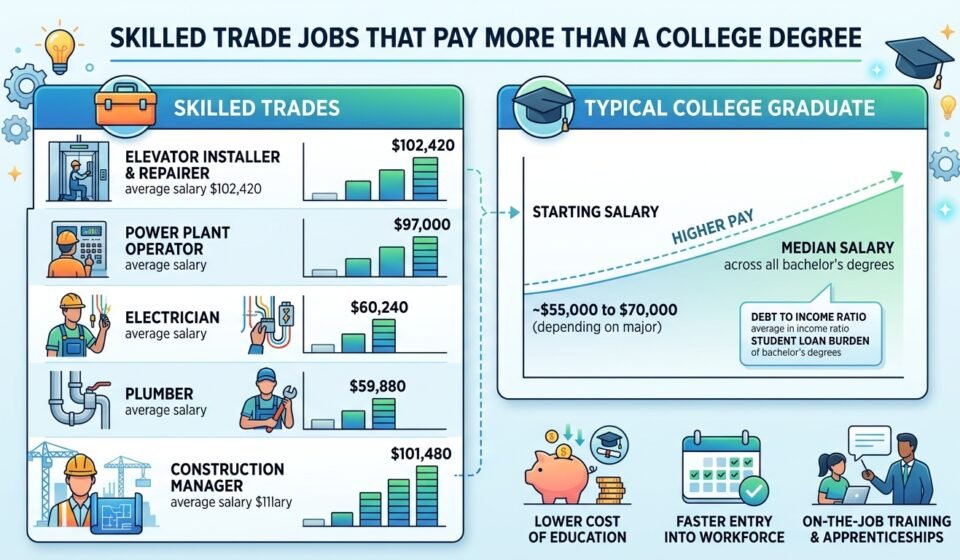

If you’ve ever done the math on a four-year degree — tuition, housing, textbooks, four years of lost income — and then looked at your friend’s paycheck who skipped college for a trade, you already know something feels off. It’s not your imagination. Across the country, skilled trade jobs are quietly outpacing traditional degree paths in both take-home pay and time-to-career.
This isn’t an anti-college argument. It’s a math argument. And for anyone exploring side hustles that pay well or a full career pivot, the trades deserve a serious look.
In this article, you’ll learn which trade careers consistently out-earn degree-holders, what it actually costs (in time and money) to get started, how to turn a trade skill into a side hustle before going full-time, and how to avoid the common traps that keep people stuck in low-paying jobs longer than necessary.
Why Skilled Trades Are Outperforming College Degrees
The average U.S. bachelor’s degree now costs well over $100,000 when you factor in tuition, fees, and lost wages during those four years. Compare that to a trade apprenticeship, where you’re often paid to learn from day one.
A few reasons trades are winning right now:
- Labor shortages are real. Millions of tradespeople are retiring faster than new workers are entering the field, which drives wages up.
- You earn while you learn. Apprenticeships pay a wage that increases as your skills grow — no tuition bill waiting at the end.
- Debt-free start. Most trade programs cost a fraction of a four-year degree, sometimes nothing at all if sponsored by an employer or union.
- Immediate demand. Skilled trades can’t be outsourced or automated the way many desk jobs can. Someone has to physically show up and do the work.
None of this means every trade job pays six figures on day one. But the ceiling is often higher — and reached faster — than people expect.
Top Skilled Trade Jobs That Pay More Than a College Degree
1. Electrician
Electricians consistently rank among the highest-paid trades. Master electricians who run their own crews or take on commercial contracts often out-earn many degree-holding professionals within 5–8 years.
- Typical path: 4–5 year apprenticeship, paid throughout
- Growth potential: Licensing, then owning your own electrical business
- Why it pays well: Every building — residential, commercial, industrial — needs one
2. Plumber
Plumbing is one of the most recession-resistant trades because pipes break regardless of the economy. Experienced plumbers, especially those who specialize in commercial or industrial systems, can command premium rates.
- Typical path: 4–5 year apprenticeship
- Side hustle angle: Weekend and emergency calls are a common early income boost
- Long-term ceiling: Owning a plumbing company
3. HVAC Technician
As climate control becomes more essential (and more complex, with smart systems and energy-efficiency requirements), HVAC techs are in constant demand.
- Typical path: 6-month to 2-year certificate program, often followed by an apprenticeship
- Bonus: Many techs start their own side hustle doing seasonal tune-ups before going full-time
- Why it pays well: Both installation and repair work stay steady year-round
4. Elevator Installer/Repair Technician
Lesser known but worth mentioning — this is one of the highest-paying trades in the country. It requires specialized training and a strong safety record, but the payoff reflects the technical skill involved.
- Typical path: 4-year apprenticeship through a union program
- Why it pays well: High technical barrier to entry, limited number of qualified workers
5. Welder
Welding spans construction, manufacturing, pipelines, and shipbuilding. Specialized welders — underwater welders, pipeline welders, or those with niche certifications — can earn dramatically more than generalists.
- Typical path: Trade school certificate (6 months to 2 years)
- Side hustle angle: Custom metalwork, repairs, or fabrication projects
- Growth potential: Specializing in high-demand niches like pipeline or underwater welding
6. Industrial Machinery Mechanic
These technicians keep factories running. As manufacturing becomes more automated, the people who can install, maintain, and repair that machinery become more valuable, not less.
- Typical path: Associate degree or apprenticeship, often 1–2 years
- Why it pays well: Downtime in a factory is expensive, so companies pay well to prevent it
7. Construction Manager (Trade-to-Leadership Path)
Not everyone wants to stay hands-on forever. Many tradespeople work their way into construction management, where trade experience combined with project oversight can lead to salaries that rival or exceed those of many corporate degree-holders.
- Typical path: Years of hands-on trade experience plus project management certifications
- Why it pays well: Combines technical know-how with leadership responsibility
How to Turn a Trade Skill Into One of the Best Side Hustles That Pay Well
One of the most underrated advantages of a trade skill is flexibility. Unlike many corporate jobs, trade skills translate directly into side income.
- Start small and local. A handyman side hustle doing minor electrical, plumbing, or repair work can bring in solid weekend income while you build a client base.
- Use word of mouth and local platforms. Neighborhood apps, local Facebook groups, and referral networks tend to outperform paid advertising for trade side hustles.
- Price for your skill level, not your age. Many new tradespeople underprice themselves out of fear of feeling like an imposter. Research standard local rates and charge accordingly.
- Reinvest early income into tools and certifications. The people who scale from side hustle to full business are usually the ones who treat early jobs as investment capital, not spending money.
- Track everything. Side hustles that pay well only stay profitable if you’re tracking materials, mileage, and time. A simple spreadsheet prevents the classic mistake of undercharging.
What It Actually Costs to Get Started
Here’s a rough comparison to put things in perspective:
| Path | Typical Cost | Typical Time to Paid Work | Starting Pay Range |
|---|---|---|---|
| Bachelor’s Degree | $40,000–$120,000+ | 4 years (unpaid) | Varies widely by major |
| Trade Apprenticeship | $0–$5,000 | Immediate (paid) | Modest, rising steadily |
| Trade Certificate Program | $2,000–$15,000 | 6 months–2 years | Moderate, rises quickly |
The trade path front-loads income instead of front-loading debt. That difference compounds over a decade.
Common Mistakes People Make When Switching to a Trade
- Choosing a trade based only on pay, not interest. The highest-paying trade in the world won’t feel worth it if you dread the work. Talk to people already in the field before committing.
- Skipping the licensing step. Some people rush into side work without proper licensing, which can limit long-term earning potential and create legal risk.
- Undervaluing soft skills. Trades that involve direct client interaction — plumbing, HVAC, electrical — reward tradespeople who communicate clearly and show up on time just as much as those with pure technical skill.
- Not planning for physical demands. Some trades are physically intensive. Building good habits early (proper lifting technique, protective gear, pacing yourself) protects your long-term earning years.
Frequently Asked Questions
Do skilled trade jobs really pay more than college degree jobs? In many cases, yes — especially when you account for the debt avoided and the years of paid work gained while degree-holders are still in school. Experienced electricians, plumbers, and elevator technicians often out-earn entry- and mid-level degree-holding professionals.
What is the highest-paying trade job without a degree? Elevator installation and repair technicians are consistently among the highest earners in the skilled trades, followed closely by experienced electricians and specialized welders.
Can I start a trade as a side hustle before quitting my job? Yes. Many tradespeople begin by taking on evening and weekend jobs — small electrical fixes, plumbing repairs, or handyman work — while still employed elsewhere, then transition full-time once demand and income are steady.
How long does it take to become a licensed tradesperson? Most licensed trades (electrician, plumber) require a 4–5 year apprenticeship. Certificate-based trades like HVAC or welding can take as little as 6 months to 2 years.
Are trade jobs a stable long-term career? Yes. Trade work is tied to physical infrastructure — buildings, pipes, wiring, machinery — that can’t be automated away or outsourced overseas, which makes these careers more resistant to economic shifts than many desk jobs.
Final Thoughts
Skilled trade jobs that pay more than a college degree aren’t a loophole or a lucky exception — they’re the result of basic supply and demand. Fewer people are entering the trades, demand keeps rising, and the people willing to learn a hands-on skill are cashing in on both immediate income and long-term stability.