
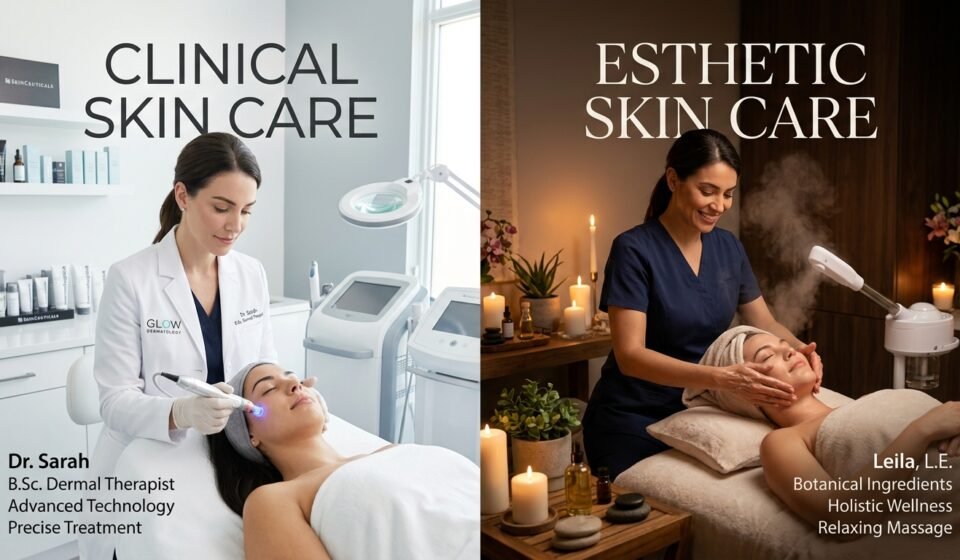

If you’ve been researching a career in the beauty and wellness industry, you’ve probably run into two job titles that seem to mean the same thing: skin care specialist and esthetician. You’re not imagining things — these terms really do overlap, and that overlap is exactly why so many people get confused when they start job hunting or looking into training programs.
Here’s the short answer: in most cases, “skin care specialist” and “esthetician” refer to the same profession. The U.S. Bureau of Labor Statistics uses “skincare specialists” as the official occupational category, while “esthetician” is the more common term used in salons, spas, and licensing boards. But the details matter, especially if you’re trying to figure out what license you need, what a job actually pays, or which career path fits your goals.
In this guide, we’ll break down exactly how these titles relate to each other, where they diverge, what training and licensing each one requires, and how to decide which path makes sense for you.
What Is a Skin Care Specialist?
A skin care specialist is a broad, umbrella term used to describe any professional who provides services focused on improving and maintaining the health and appearance of skin. This is the term you’ll most often see in government labor statistics, job classification systems, and some medical or clinical settings.
Skin care specialists may work in:
- Day spas and resort spas
- Medical spas (med spas)
- Dermatology offices
- Salons
- Wellness centers
- Cosmetic retail settings
Because “skin care specialist” is a category rather than a specific licensed title, the exact duties can vary quite a bit depending on where someone works. Some skin care specialists perform hands-on treatments themselves, while others focus more on product recommendations, skin analysis, or supporting a dermatologist or plastic surgeon.
Common Skin Care Specialist Duties
- Analyzing a client’s skin type and concerns
- Recommending skin care products and routines
- Performing facials, exfoliation, and other treatments
- Educating clients on skin health and sun protection
- Assisting with pre- and post-procedure care in clinical settings
What Is an Esthetician?
An esthetician (sometimes spelled “aesthetician”) is a licensed professional trained specifically in skin care treatments. Unlike “skin care specialist,” which is a general job category, “esthetician” is a legally protected title in most U.S. states. That means you can’t call yourself an esthetician — or legally perform esthetic services — without completing state-approved training and passing a licensing exam.
Estheticians typically work directly with clients, performing hands-on services such as:
- Facials and facial massage
- Chemical peels (at the level permitted by their state license)
- Microdermabrasion
- Waxing and hair removal
- Extractions
- Body treatments and wraps
Because licensing is state-regulated, the exact scope of practice for an esthetician can differ depending on where you live and work. Some states allow estheticians to perform more advanced treatments, like certain laser procedures, while others restrict those services to medical professionals.
Types of Estheticians
- Spa or salon esthetician – Focuses on relaxation-based skin treatments and general skin health.
- Medical esthetician – Works alongside dermatologists or plastic surgeons, often assisting with pre- and post-treatment skin care for clinical procedures.
- Mobile or freelance esthetician – Offers services independently, often traveling to clients or working from a private studio.
Skin Care Specialist vs. Esthetician: Key Differences
While the terms are often used interchangeably, here’s where they actually differ:
| Factor | Skin Care Specialist | Esthetician |
|---|---|---|
| Type of term | Broad occupational category | Legally licensed title |
| Licensing required | Not always | Yes, in nearly all U.S. states |
| Where you’ll see it used | Labor statistics, job boards, medical settings | Salons, spas, state licensing boards |
| Scope of duties | Can include product sales, consulting, or hands-on care | Primarily hands-on skin treatments |
| Regulation | Varies by employer | Regulated by state cosmetology or esthetics boards |
In practice, most estheticians are also accurately described as skin care specialists — but not every skin care specialist has gone through esthetician licensing, especially if their role is more consultative or product-focused rather than treatment-based.
Education and Licensing Requirements
This is where the real difference between the two titles shows up.
Esthetician Licensing
To become a licensed esthetician, you’ll generally need to:
- Complete a state-approved esthetics program, typically ranging from 300 to 750 hours depending on the state.
- Pass a written and practical state licensing exam.
- Apply for licensure through your state’s cosmetology or esthetics board.
- Renew your license periodically, which may include continuing education requirements.
Program length and requirements vary significantly by state, so it’s worth checking your specific state board before enrolling in a program.
Skin Care Specialist Requirements
If you’re pursuing a role labeled “skin care specialist” that involves hands-on treatments, you’ll almost always need the same esthetician license described above. However, if the role is more focused on retail, product consulting, or administrative support in a dermatology office, formal licensing may not be required — though many employers still prefer candidates with esthetics training or a cosmetology background.
Salary Comparison: What Can You Expect to Earn?
Because these roles overlap so heavily, salary ranges tend to be similar, though pay can vary based on location, work setting, and specialization.
- General skin care specialists/estheticians often start in the low-to-mid $30,000s annually, with experienced professionals in higher cost-of-living areas or medical spas earning $50,000 or more.
- Medical estheticians working in dermatology or plastic surgery offices often out-earn spa-based estheticians due to the specialized skill set required.
- Commission and tips play a significant role in total earnings, especially in salon and spa settings, so base salary alone doesn’t always tell the full story.
If you’re evaluating job offers, ask specifically about commission structure, product sales incentives, and tipping norms at that workplace — these can meaningfully change your take-home pay.
Which Career Path Is Right for You?
If you’re deciding between pursuing esthetics licensure or a broader skin care specialist role, consider the following:
Choose Esthetician Licensing If You Want To:
- Perform hands-on treatments like facials, peels, and waxing
- Work independently or open your own studio someday
- Have a clear, standardized credential recognized across the industry
- Work in a spa, salon, or med spa setting
A Broader Skin Care Specialist Role Might Fit If You:
- Are more interested in product knowledge, sales, or consulting
- Want to work in a dermatology office in a support role before pursuing further training
- Are exploring the industry before committing to a full esthetics program
Many people start in a more general skin care specialist role and later pursue esthetician licensing once they’ve confirmed they enjoy hands-on client work.
Frequently Asked Questions
Is a skin care specialist the same as an esthetician? In most cases, yes. “Skin care specialist” is the official occupational term used by the Bureau of Labor Statistics, while “esthetician” is the licensed title used within the industry and by state licensing boards. Most people working as skin care specialists are licensed estheticians.
Do I need a license to work in skin care? If your job involves hands-on treatments like facials, chemical peels, or waxing, you’ll need an esthetician license in nearly every U.S. state. Roles focused on retail or consulting may not require licensing, though training is still a strong advantage.
How long does it take to become an esthetician? Most state-approved programs take a few months to about a year to complete, depending on required hours and whether you attend full-time or part-time.
Can estheticians work in medical settings? Yes. Medical estheticians work in dermatology offices, plastic surgery practices, and med spas, often providing pre- and post-procedure skin care under the supervision of a physician.
Which pays more, esthetician or skin care specialist roles? Pay depends more on the specific work setting than the job title itself. Medical estheticians and those working in high-end spas or med spas tend to earn more than general spa-based roles.