
Introduction
Losing a job, moving to a new city, or simply needing income sooner rather than later can turn job hunting from a background task into an urgent priority. The problem is that most job search advice is written for people who have months to spare — not for someone who needs an offer letter in the next few weeks.
The good news is that finding a job fast isn’t about luck. It’s about focusing your energy on the strategies that actually produce interviews, and cutting out the ones that just eat up your time. In this guide, you’ll learn exactly how to structure a fast, effective job search — from your resume and online presence to networking, applications, and interviews — so you can go from “urgently looking” to “starting Monday” as quickly as possible.
1. Get Clear on What You’re Applying For
One of the biggest reasons job searches drag on is a lack of focus. Applying to anything and everything — from unrelated industries to roles you’re only half-qualified for — actually slows you down. It spreads your effort thin and makes it harder to tailor applications well.
Before you send a single application, spend 30 minutes doing the following:
- List 2-3 job titles you’re realistically qualified for right now
- Identify the industries or companies most likely to be hiring for those roles
- Decide on your minimum acceptable salary and work arrangement (remote, hybrid, on-site)
This clarity lets you move faster later, because you won’t waste time on postings that don’t fit.
Why Narrowing Your Focus Speeds Things Up
It might feel counterintuitive, but applying to fewer, better-matched jobs usually gets faster results than a scattershot approach. A focused search lets you write stronger, more specific applications — which recruiters notice immediately.
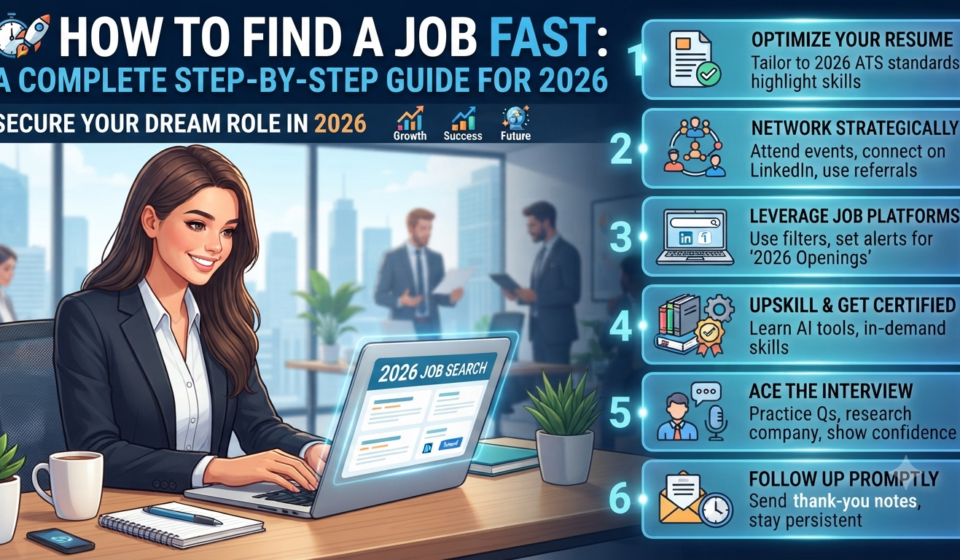
2. Fix Your Resume for Speed and Impact
When you’re short on time, your resume needs to work harder in less time. Recruiters typically spend just a few seconds scanning a resume before deciding whether to read further.
Here’s how to make it count:
- Put your most relevant experience at the top. If you’ve held multiple roles, lead with whichever is most relevant to the job you want now, even if it means adjusting the order slightly for different applications.
- Use numbers wherever possible. “Reduced processing time by 25%” is more convincing than “Improved processing efficiency.”
- Cut anything older than 10-15 years unless it’s directly relevant — it’s rarely worth the space.
- Match keywords from the job description. Many companies use automated applicant tracking systems (ATS) that scan for specific terms before a human ever sees your resume.
If you only have time to fix one thing today, fix your resume first. It’s the single document standing between you and every interview opportunity.
3. Clean Up and Optimize Your Online Presence
Recruiters often check LinkedIn — and sometimes general search results — before or after receiving your application. A weak or outdated online presence can quietly cost you interviews you’d otherwise get.
Quick wins that take under an hour:
- Update your LinkedIn headline to reflect the role you’re seeking, not just your last job title
- Turn on the “Open to Work” setting, visible to recruiters only if you prefer privacy
- Make sure your LinkedIn experience section matches your resume
- Remove or privatize anything on public social media that could raise concerns for an employer
A polished, consistent online presence reassures recruiters that you’re serious and professional — which matters even more when you’re trying to move fast.
4. Use Networking as a Shortcut, Not an Afterthought
Many job seekers treat networking as optional and rely entirely on job boards. But a large share of roles are filled through referrals and personal connections, often before they’re publicly posted at all.
When time is tight, networking can be your fastest path to an interview:
- Message former colleagues, managers, or classmates directly and let them know you’re job searching
- Ask specifically if their company is hiring, or if they know of anyone who is
- Attend one or two relevant industry events or webinars, even virtual ones, and follow up with new contacts afterward
- Don’t hesitate to ask for a referral once you’ve applied somewhere — most employees are happy to help if asked politely and directly
A single well-placed message to the right person can sometimes get you an interview faster than twenty online applications.
5. Apply Strategically, Not Just Frequently
When you’re in a hurry, it’s tempting to blast out applications everywhere. But quality still matters more than sheer volume, even under time pressure.
A smarter approach:
- Apply within 24-48 hours of a posting going live. Early applicants generally get noticed more, before the recruiter is buried in submissions.
- Set up job alerts on major platforms so new postings reach you immediately.
- Spend 10 extra minutes tailoring your resume and cover letter to each role — it dramatically increases response rates compared to generic submissions.
- Apply directly on company websites when possible, in addition to job boards, since some employers prioritize direct applicants.
Aim for a manageable daily target — for example, five well-tailored applications a day — rather than fifty rushed, generic ones.
6. Prepare for Interviews Before You’re Invited to One
When you’re job hunting urgently, there’s no time to scramble once an interview is scheduled. Prepare in advance so you can move quickly when the call comes.
- Practice answers to common questions like “Tell me about yourself” and “Why do you want this role?”
- Prepare two or three specific examples of past achievements using a simple story structure: situation, action, result
- Research typical salary ranges for the role so you’re ready if compensation comes up
- Keep a folder with your resume, references, and portfolio ready to send immediately
Being interview-ready at all times means you can move from application to offer in the shortest possible timeline.
7. Follow Up Instead of Waiting Silently
Silence after applying doesn’t necessarily mean rejection — often it just means the hiring process is slower than you’d like. A short, polite follow-up can help keep your application visible.
- Send a brief follow-up email about a week after applying if you haven’t heard back
- After an interview, send a thank-you note within 24 hours, reiterating your interest
- If you have a mutual connection at the company, consider asking them to check on your application’s status
Following up shows initiative and keeps you top of mind, which can genuinely speed up a slow-moving process.
Frequently Asked Questions
How long does it typically take to find a job? It varies widely by industry, location, and experience level, but many job seekers land a new role within 4-10 weeks when actively and strategically searching. Focused effort, tailored applications, and networking can shorten that timeline considerably.
Is it better to apply to more jobs or fewer, tailored ones? Tailored applications generally produce better results than mass-applying. A focused, well-matched application is far more likely to get a response than a generic one sent to dozens of postings.
Should I take a lower-paying job while I keep searching? This is a personal decision based on your financial situation. Some job seekers take a temporary or part-time role to cover expenses while continuing to search for a better long-term fit — there’s no single right answer here.
Do job boards or networking work better for a fast job search? Both matter, but networking often produces faster results because it can bypass the standard application queue entirely through referrals and personal introductions.
How can I make my resume stand out quickly? Focus on leading with your most relevant experience, quantifying achievements with numbers, and matching keywords from the job description — these three changes alone can significantly improve response rates.