
Meta Description: Avoid these top 10 job search mistakes that are quietly costing you offers. Learn what recruiters really look for and how to fix your approach today.
Introduction: Why Your Job Search Might Be Working Against You
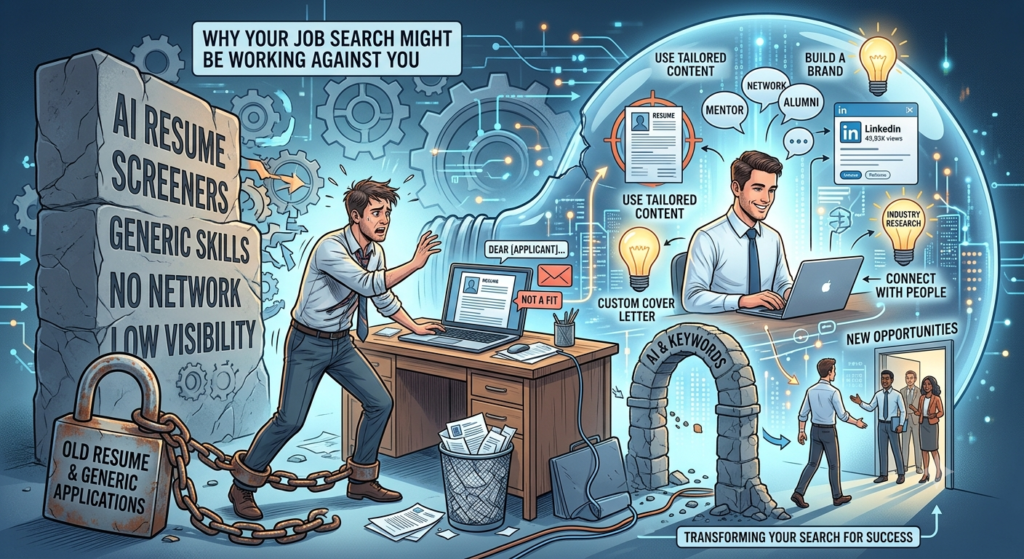
You’ve sent out dozens of applications. You’ve updated your resume. You’ve waited by your phone. Still — nothing.
Sound familiar?
Here’s the hard truth: most job seekers don’t fail because they lack skills or experience. They fail because of small, avoidable mistakes that quietly kill their chances before a recruiter even reads their name.
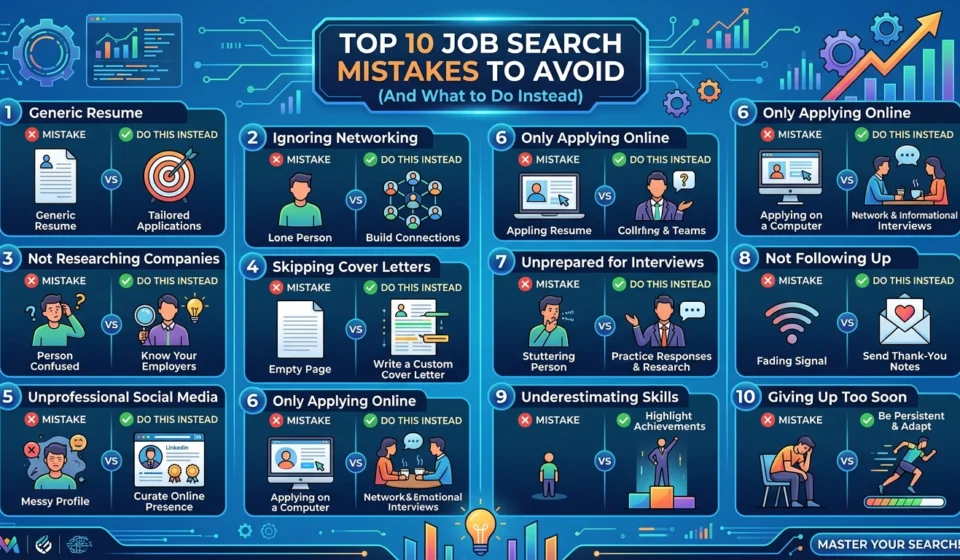
In this guide, you’ll discover the top 10 job search mistakes that hold people back — and exactly what you should do instead. Whether you’re a fresh graduate looking for your first role or a professional switching careers, these insights will help you search smarter, apply better, and land faster.
Mistake #1: Sending the Same Generic Resume to Every Job
This is the single most common job search mistake, and it costs more candidates than anything else.
Hiring managers review hundreds of applications. A generic, one-size-fits-all resume stands out for all the wrong reasons. When your resume doesn’t reflect the specific language and requirements in a job posting, it often gets filtered out automatically — by software called an Applicant Tracking System (ATS) — before a human even sees it.
What to do instead:
Tailor your resume for each application. Read the job description carefully and mirror the key skills and phrases they use. You don’t need to rewrite the whole thing — adjusting your summary, skills section, and two or three bullet points is usually enough.
Pro tip: Keep a “master resume” with all your experience, then build a targeted version from it for each role.
Mistake #2: Ignoring the Power of Keywords in Your Resume
Related to the above — many job seekers write resumes that feel natural to them but are invisible to ATS software.
If a job posting asks for “project management,” but your resume says “led team initiatives,” the ATS may not make that connection. You could be perfectly qualified and still get rejected at the first filter.
What to do instead:
Study the job description like a checklist. Identify the key skills and phrases mentioned (especially those repeated more than once) and include them naturally in your resume. Tools like Jobscan can help you compare your resume against a job listing to spot gaps.
Mistake #3: Only Applying Online and Skipping Networking
Here’s a stat that surprises most people: up to 70–80% of jobs are never publicly advertised. They get filled through referrals, internal promotions, and networking — before they ever appear on a job board.
If your entire job search strategy involves clicking “Apply Now” on portals, you’re missing the majority of opportunities.
What to do instead:
Start building relationships before you need them. Connect with professionals in your field on LinkedIn. Attend industry events or webinars. Reach out to former colleagues. Let people in your network know you’re open to opportunities.
A warm introduction from a mutual contact can get your resume to the top of the pile instantly.
Mistake #4: Writing a Weak or Generic Cover Letter
Many candidates either skip the cover letter entirely or write something like: “I am applying for the position of Marketing Executive. Please find my resume attached.”
That tells a recruiter nothing. It signals low effort and zero enthusiasm — two things no employer wants to see.
What to do instead:
Your cover letter should answer three questions in a compelling way:
- Why do you want this specific role?
- Why do you want to work at this specific company?
- What can you bring that makes you the right choice?
Keep it to three short paragraphs. Be direct, be genuine, and always address it to the hiring manager by name if you can find it.
Mistake #5: Not Preparing Properly for Interviews
Getting the interview is only half the battle. Many candidates walk in underprepared, hoping they can “just wing it” — and it shows.
Recruiters can immediately tell the difference between someone who has done their research and someone who hasn’t. Generic answers to common questions like “Tell me about yourself” or “Why do you want to work here?” rarely leave a strong impression.
What to do instead:
Before any interview:
- Research the company — their products, recent news, mission, and culture.
- Prepare answers to the most common interview questions using the STAR method (Situation, Task, Action, Result).
- Prepare thoughtful questions to ask — this signals genuine interest.
- Practice out loud — not just in your head.
Preparation takes a few hours but can be the difference between an offer and a rejection.
Mistake #6: Applying for Jobs You’re Not at Least 60% Qualified For
There’s a popular idea that you should apply even if you only meet 50% of the criteria. While it’s true you shouldn’t rule yourself out too quickly, constantly applying for roles that are far beyond your current experience leads to wasted time and demoralizing silence.
What to do instead:
Focus on roles where you meet at least 60–70% of the requirements. For the skills you’re missing, be honest in your application and show you’re actively learning them. Employers appreciate self-awareness and initiative far more than overconfidence.
Mistake #7: Having an Unprofessional Online Presence
Before calling you in for an interview, most recruiters will Google your name. What they find matters — a lot.
Old social media posts, an outdated or empty LinkedIn profile, or simply not showing up in search results at all can raise doubts about your professionalism and credibility.
What to do instead:
- Clean up your social media — set personal profiles to private or review what’s publicly visible.
- Build a strong LinkedIn profile — include a professional photo, a compelling headline, and a well-written summary.
- Consider creating a portfolio or personal website if you’re in a creative or technical field.
Your online presence is your digital first impression. Make it count.
Mistake #8: Following Up Too Little — or Not at All
Applying for a job and then going completely silent is a missed opportunity. Many candidates assume that following up is “annoying” or unnecessary. In reality, a polite, well-timed follow-up can demonstrate enthusiasm and professionalism.
What to do instead:
After submitting an application, wait about one to two weeks and then send a brief, polite email expressing continued interest. After an interview, always send a thank-you email within 24 hours — this alone sets you apart from a large percentage of candidates who don’t bother.
Keep it short, warm, and genuine. Don’t be pushy, but don’t disappear either.
Mistake #9: Setting Unrealistic Salary Expectations (Or Not Researching Salary at All)
Many candidates either ask for far more than market rate — which can price them out of consideration — or accept far less than they deserve because they didn’t research salary ranges beforehand.
Both extremes can hurt you. The first gets your application dismissed; the second leaves money on the table for years.
What to do instead:
Research typical salary ranges for your role, experience level, and location using platforms like Glassdoor, LinkedIn Salary, or Payscale. When asked for your expectations, give a confident range — not a single number — based on your research.
This puts you in a much stronger position to negotiate fairly.
Mistake #10: Giving Up Too Soon
Job searching is genuinely hard. It takes longer than most people expect, involves more rejection than feels fair, and can chip away at your confidence if you let it.
One of the biggest job search mistakes is letting that frustration push you into giving up — or worse, accepting the first offer out of desperation rather than the right one.
What to do instead:
Set a daily or weekly job search routine and stick to it. Aim to apply to a specific number of quality roles per week rather than mass-applying to everything. Take breaks when you need them. And remember — one rejection is not a reflection of your worth. Every application is a learning opportunity.
The right job is out there. The key is to stay consistent without burning out.
FAQ: Common Job Search Questions Answered
How long does a typical job search take?
On average, a job search takes 3 to 6 months, though this varies widely depending on the industry, seniority level, and current market conditions. Entry-level roles can sometimes be filled faster, while specialized or senior positions may take longer.
Should I apply for a job if I don’t meet all the requirements?
Yes — but with realistic expectations. If you meet 60–70% of the listed criteria, it’s worth applying. Focus on highlighting the skills you do have and show genuine enthusiasm for learning the rest. Avoid applying for roles where you’re significantly underqualified, as this rarely leads to success.
Is a cover letter really necessary in 2025?
In many cases, yes. While some companies don’t read them, others weigh them heavily. A strong cover letter gives you an opportunity to show personality, demonstrate research, and explain things your resume can’t — like why you’re changing industries or why you have a gap in employment.
How many jobs should I apply to per week?
Quality beats quantity. Applying to 5–10 well-targeted jobs per week is far more effective than mass-applying to 50 generic ones. Each application should be tailored, with a resume and cover letter that speaks directly to that specific role.
What’s the best way to follow up after a job application?
Wait one to two weeks after applying, then send a concise email to the hiring manager (if you have their contact) expressing continued interest. After an interview, send a thank-you note within 24 hours. Keep all follow-ups brief, polite, and professional.
Conclusion: Fix These Mistakes and Change Your Job Search Results
The job market can feel overwhelming — but most of the obstacles between you and your next role come down to fixable habits and strategies.
By avoiding these top 10 job search mistakes, you’ll immediately improve your chances:
- Tailor your resume and cover letter for every role
- Use relevant keywords to get past ATS filters
- Network actively, not just online
- Prepare thoroughly for every interview
- Maintain a professional online presence
- Follow up consistently but respectfully
- Research salaries before you negotiate
- Stay patient and persistent
The candidates who get hired aren’t always the most qualified — they’re the ones who search smarter.
Read more