
Introduction
Most people accept the first salary number they’re offered — not because it’s fair, but because negotiating feels awkward, risky, or even ungrateful. Yet employers almost always expect some back-and-forth, and in most cases, simply asking can result in a meaningfully better offer.
Salary negotiation isn’t about being pushy or difficult. It’s a normal, expected part of the hiring process — and skipping it can quietly cost you thousands of dollars over the life of your career, since future raises are often calculated as a percentage of your current pay. This guide walks through exactly how to negotiate salary with confidence, whether you’re evaluating a new job offer or asking for a raise in your current role.
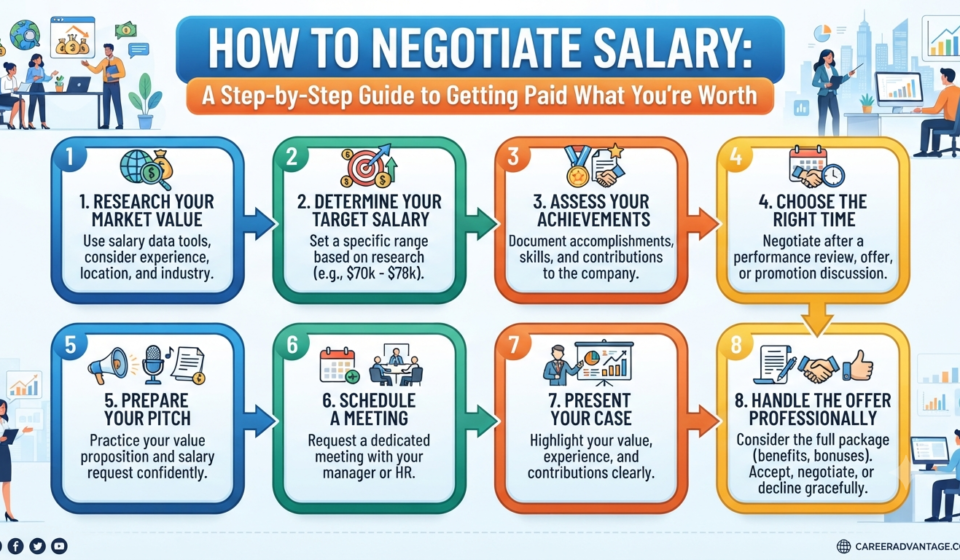
1. Do Your Research Before Any Conversation
Walking into a negotiation without knowing what the role is actually worth puts you at an immediate disadvantage. Before discussing numbers, research typical pay for your role, experience level, and location.
Useful sources include:
- Salary comparison sites and industry salary surveys
- LinkedIn Salary or similar platforms showing self-reported ranges
- Conversations with people in similar roles, if you’re comfortable asking
- Job postings for similar positions that list a salary range
Aim to walk in with a realistic range in mind, not just a single number, so you have room to negotiate within reason.
Factor in the Full Picture, Not Just Base Salary
Compensation includes more than base pay — bonuses, equity, remote flexibility, vacation days, and benefits all factor into total value. Sometimes a company can’t move much on base salary but has more flexibility elsewhere.
2. Let the Employer Name a Number First
Whenever possible, avoid being the first to state a specific number, especially early in the hiring process. If asked about salary expectations before an offer, it’s reasonable to redirect:
“I’d like to learn more about the role and responsibilities first before discussing numbers — but I’m happy to share my range if that’s helpful.”
If pressed, give a range rather than a single figure, with the lower end still being a number you’d genuinely be happy with.
3. Negotiate After You Receive an Offer, Not Before
Once you have an actual offer in hand, you have real leverage — the company has already decided they want you. This is the right moment to negotiate, not before.
A simple, professional approach:
“Thank you so much for the offer — I’m genuinely excited about this role. Based on my research and experience, I was hoping we could discuss a base salary closer to [specific number]. Is there flexibility there?”
Keep your tone collaborative, not confrontational. You’re not making demands — you’re having a normal conversation about aligning expectations.
Always Get the Final Offer in Writing
Once you’ve reached an agreement, whether it’s the original offer or a negotiated one, make sure you receive the final terms in writing before resigning from a current role or turning down other opportunities.
4. Asking for a Raise: A Slightly Different Approach
Negotiating a raise in your current role follows similar principles but usually requires more preparation around demonstrating your value over time.
- Document your achievements over the past several months — completed projects, measurable results, added responsibilities
- Time the conversation well — ideally around a performance review, after a major accomplishment, or when the company is doing well financially
- Request a meeting specifically for this conversation, rather than raising it casually or unexpectedly
- Lead with your contributions, then transition into your ask:
“Over the past year, I’ve taken on [specific responsibilities] and delivered [specific results]. Based on that, and current market rates for this role, I’d like to discuss adjusting my salary to better reflect that.”
5. Handle Pushback Calmly
It’s common for an employer to respond with “we don’t have room to move” or a smaller counteroffer. This doesn’t necessarily mean the conversation is over.
- Ask if there’s flexibility in other areas — signing bonus, additional vacation days, a earlier performance review, remote work days
- If the answer is genuinely final, decide whether the overall package still meets your needs before accepting or declining
- Stay polite and professional regardless of the outcome — the relationship continues either way, and burning bridges rarely helps
6. Know When to Walk Away
Not every negotiation ends in your favor, and that’s an important possibility to accept going in. If an offer remains significantly below your minimum requirements even after negotiating, it’s reasonable to decline.
Before you do, weigh:
- Whether the non-monetary benefits (growth, learning, flexibility) offset the lower pay
- Whether you have other offers or opportunities in the pipeline
- Your own financial situation and how urgently you need this specific role
Being willing to walk away, even if you never have to use it, tends to make negotiations feel less high-stakes and more like a normal business conversation.
Frequently Asked Questions
Is it risky to negotiate a job offer? Generally no. Most employers expect some negotiation and won’t rescind an offer simply because you asked professionally for more. Reasonable, respectful negotiation is a normal part of hiring.
What if I don’t know the typical salary range for a role? Use salary comparison websites, industry reports, and job postings with listed ranges to build a realistic estimate before any conversation.
Should I negotiate if I’m happy with the initial offer? It’s usually still worth a polite ask, since even a modest increase compounds over time through future raises and bonuses tied to your base salary.
How do I ask for a raise without sounding pushy? Focus on documented achievements and market data rather than personal needs, and frame the conversation collaboratively rather than as a demand.
What if my employer says there’s no budget for a raise? Ask about non-salary alternatives like extra vacation days, a title change, remote flexibility, or a scheduled follow-up review in a few months.